
Searching Fayette County Criminal Dockets
Start at the Fayette County Clerk of Superior, State and Magistrate Courts' Online Services directory. Its Court Docket link opens the county register covering Superior, State, and Magistrate entries. That register threw an internal error in August 2026. Treat a blank or failed screen as a dead end on the website, not as proof that no case exists. Before you search, gather the full defendant name. A rough case year helps too, along with the charge and any case number printed on a notice.
Match the court to whatever paper you hold. The citation, bond paperwork, summons, or hearing notice names it. The Fayette County criminal docket route also shifts with the offense level. If the web register stalls, fall back on the matching clerk desk. A public terminal in the courthouse works. So does the assigned judge's calendar. Each path reaches the same docket entries.
- Open the Clerk's Online Services directory and select Court Docket.
- Search the known name or case number and confirm the court.
- Compare the case style, year, charge, and current setting.
- Use the calendar only to confirm a scheduled event.
- Ask the clerk for the filed document or certified disposition when needed.
PeachCourt offers another official route for participating Superior and State courts. A free account is required. It may serve up file-stamped documents, but it is not anonymous, and it does not promise every older or closed file.
Fayette Criminal Search Fallbacks
The public register and the document images are two different things. Fayette County gives you several practical channels. State Court criminal staff answer at 770-716-4293. For Superior criminal records, start with the Clerk at 770-716-4290. The Superior Court office sits at 770-716-4280. Public terminals and supervised file review wait at One Center Drive. Hours run 9 a.m. to 5 p.m. A file checked out to a judge or courtroom may be off the shelf for a while.
For copies by mail, use the official criminal records form addressed to Criminal Records. The form lets you name the document you want. It might be an accusation, indictment, final disposition, or something else. Payment comes after processing, by phone card, or by mailed business check, money order, or cashier's check. The form lists no fixed processing time and no search fee.
Failed search: Retry through Online Services, then call the correct desk or use the public terminal. Do not treat a portal error as a no-case result.
Inside a Fayette County Criminal Docket
A Fayette County criminal docket is the court's chronological register for a case. Expect to see the case number and filing year. The court and judge appear, plus case style, charge or status, parties and attorney roles, settings, events, documents, disposition, related cases, and any restriction or redaction state. Exact labels on the county portal are hard to pin down while it is down. Do not guess at local codes.
| Case identity | Case number, year, case style, assigned court, and judge. |
|---|---|
| Charge information | Charge or status wording and accusation or indictment references when filed. |
| Settings | Arraignment, motions, jury trial, date, time, and calendar placement. |
| Events and documents | Chronological filings, orders, and document references that may require a copy request. |
| Disposition | The final procedural or outcome entry, which is distinct from a future calendar setting. |
The copy form asks for more than the case itself: defendant, case year, charge, number of copies, requester contact data, and return method. A birth date can help the clerk find the right file. Supplying it there, though, is not permission to publish the date.
Fayette Arraignment Calendar Labels
The Clerk posts judge and court calendars as dated PDFs. The State Court calendar page for Judge Jason B. Thompson links arraignment settings. Labels there include “CRIMINAL MOTIONS AND ARRAIGNMENT,” “CRIMINAL JURY TRIAL,” and “CRIMINAL ARRAIGNMENT CALENDAR.” Read them as the reason a case is set. They say nothing about what happened at the hearing. That official calendar page is where Fayette County criminal docket settings get published.
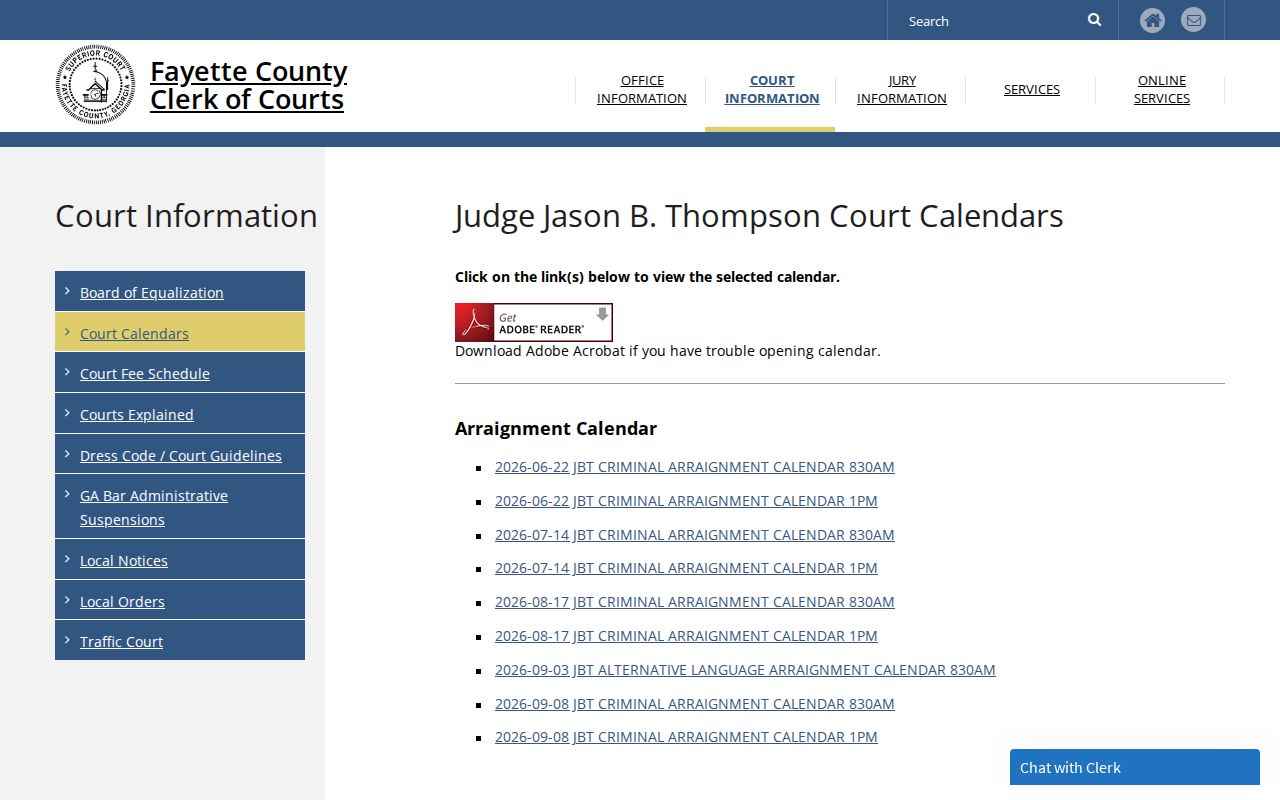
Pair the linked PDF date with the printed notice you received. To confirm an outcome, you need a later docket event, a signed order, or a certified final disposition.
- Arraignment
- The appearance at which charges and a plea or next step are addressed.
- Criminal motions
- A calendar for requests that need a court ruling before disposition.
- Jury trial
- A trial setting, not a statement that a trial occurred.
- Disposition
- The final procedural or outcome entry recorded after the relevant court action.
How a Criminal Case Moves
Cases move at different speeds, but the Fayette County criminal docket records a sequence. A charge may bring an accusation or indictment, arraignment, motions, trial settings, a plea or trial, disposition, and sentencing. A reset just adds another setting. The case is not over.
Docket flow: Charge Filed › Arraignment › Pretrial Settings › Plea or Trial › Disposition › Sentencing
Each stage leaves a different record. The docket identifies events; the calendar announces a future setting; the filed order or sentence holds the court's operative text. If you want the final result, request the final disposition instead of trusting an old calendar.
Courts That Hold Criminal Dockets
The Superior Court of Fayette County is part of the Griffin Judicial Circuit. It holds felony charges and felony trial activity. State Court takes misdemeanors, traffic citations, and county ordinance violations. The Solicitor General prosecutes its criminal cases. The split matters. Search a misdemeanor as a Superior felony case and you will come up empty.
Magistrate Court handles warrant applications and related preliminary functions. Its official page doubles as a clear visual check on jurisdiction.
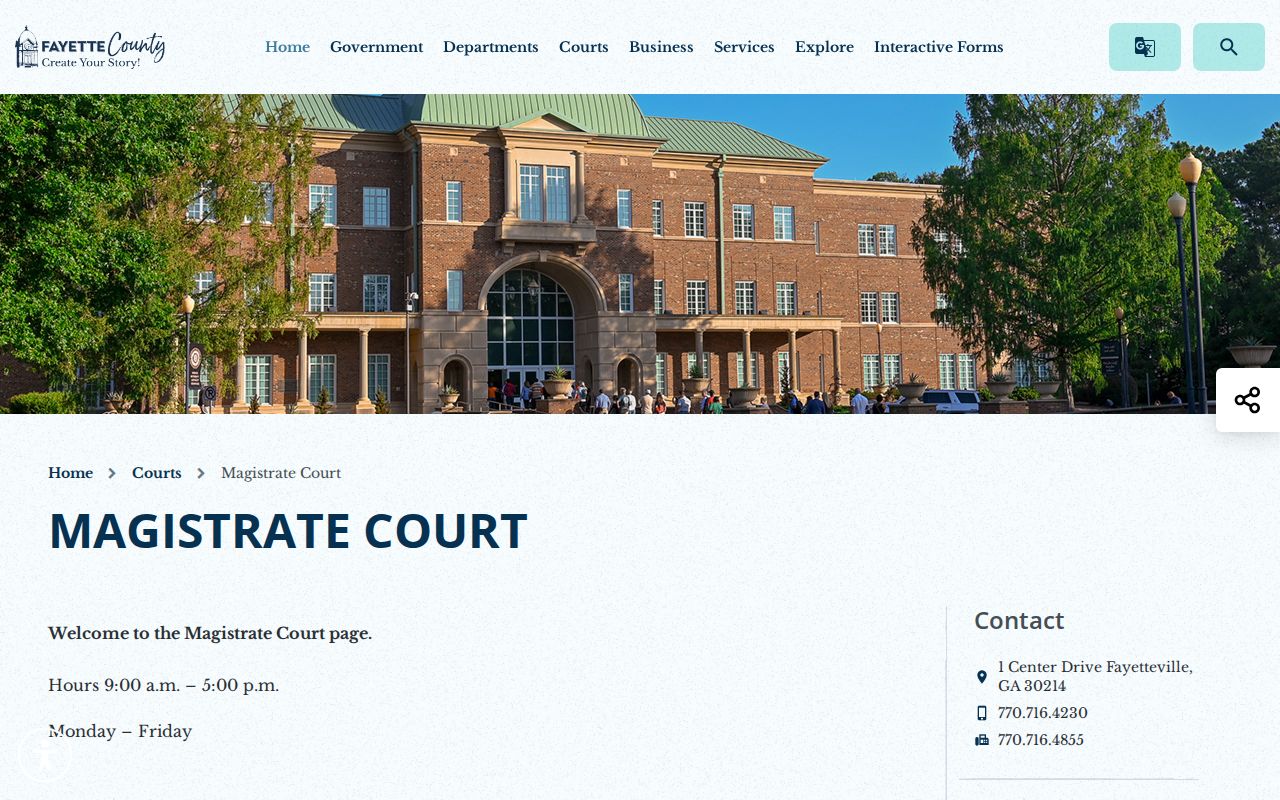
A warrant application or preliminary matter can live in a different record stream from the later felony prosecution. Route your inquiry by court and by stage.
A municipal ticket or ordinance case stays with the city court named on the citation unless it is transferred. Never assume it belongs to county State Court.
Fayette Juvenile Dockets Stay Separate
Fayette County Juvenile Court hears delinquency, dependency, children in need of services, juvenile traffic, and related matters. Its official court information makes the point plain: those records cannot be folded into an adult Fayette County criminal docket search.
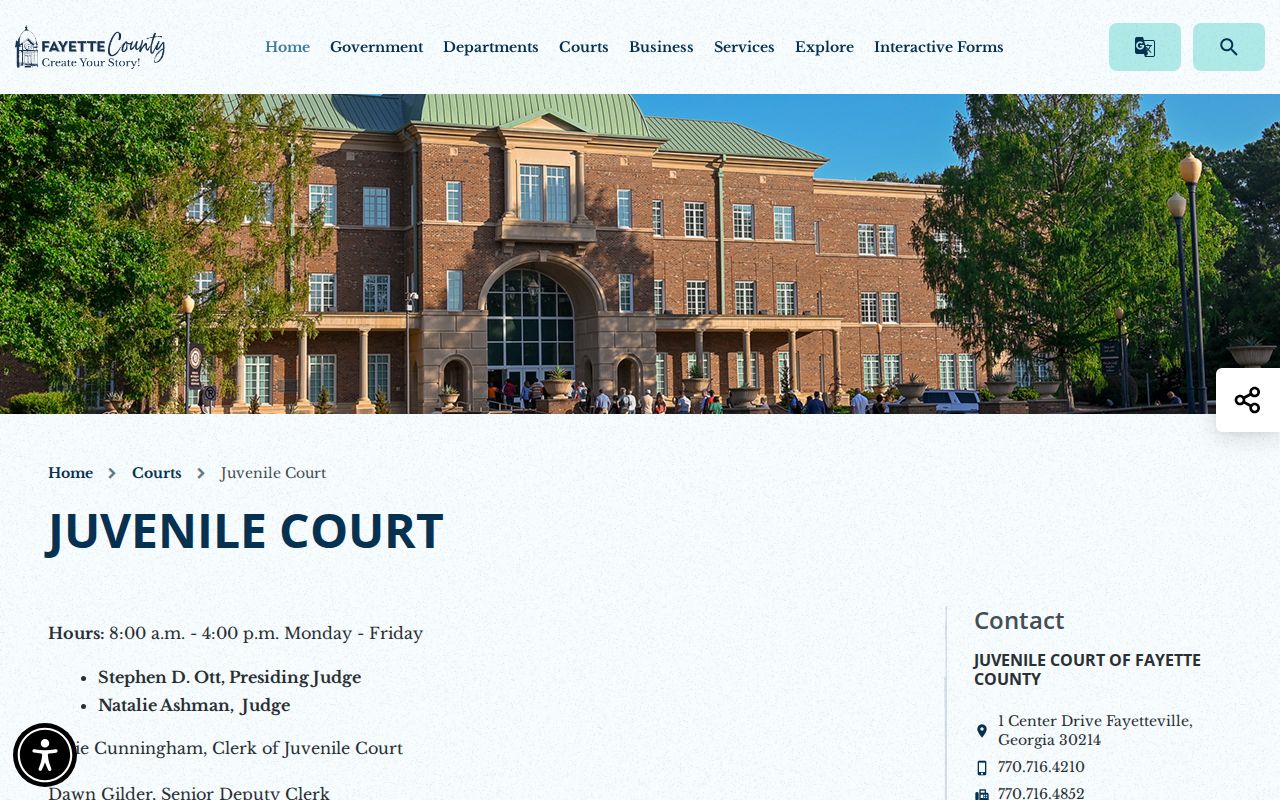
Juvenile dockets in Fayette County sit apart from the adult system. Georgia law lets a court seal juvenile matters in certain situations. For that reason, public guidance leaves out names, birth dates, and case details for children. An adult docket search can still come back empty when a juvenile was involved. Call Juvenile Court directly at that point. Skip the digging through municipal or adult criminal records. The blank entry usually means routing or confidentiality, not that nothing happened.
Fayette Specialty Criminal Dockets
Fayette County State Court runs two specialty programs alongside its regular caseload. They are DUI/Drug Court and Veterans Treatment Court. Each blends supervision with services. Neither program replaces the underlying case docket. So any docket entry or program contact still has to line up with the right State Court case number. The county's State Court probation page posts the official contact route for supervision questions tied to those cases.
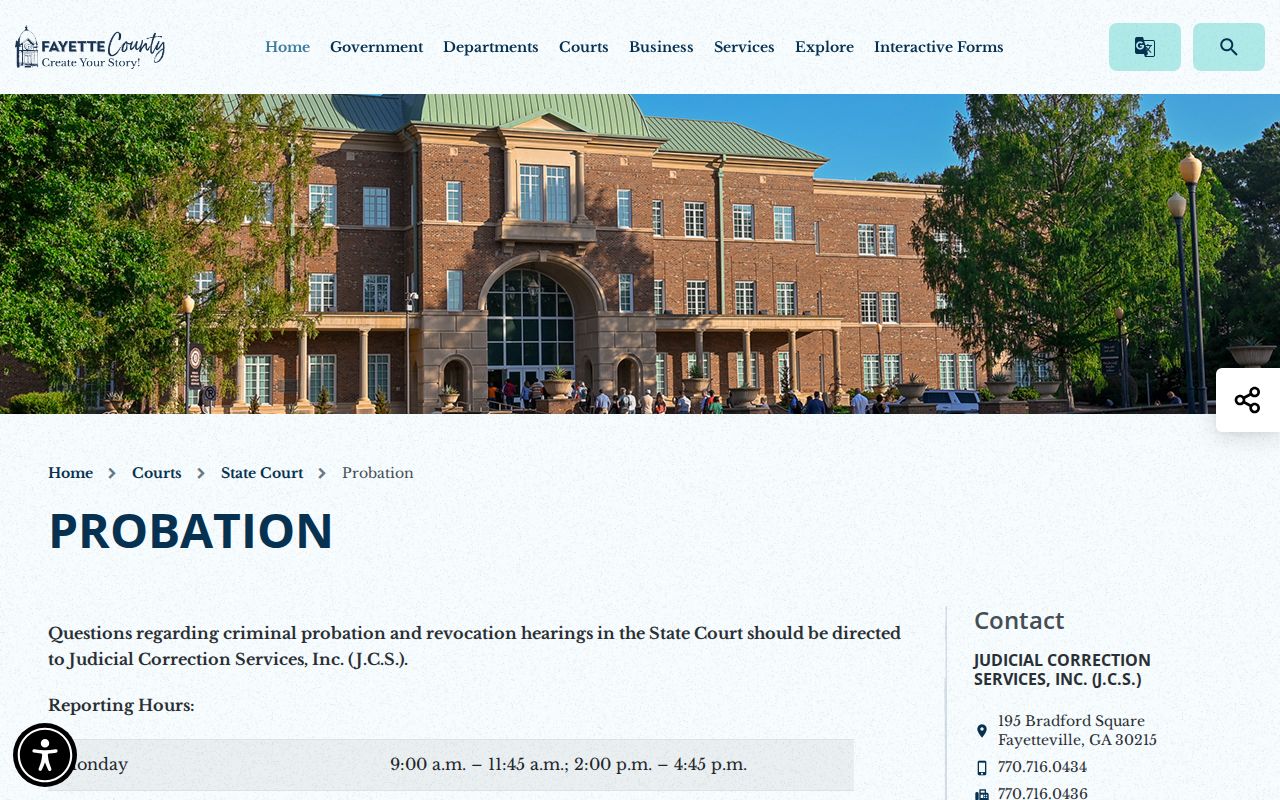
Probation staff can point a question in the right direction once a case is resolved. That is their limit, though. The clerk still holds the docket, the sentence, and the final order.
Sealed Dockets and Public Access
The Clerk's Search Policy treats State and Superior Court files as open to inspection. A statute or court order must seal them for that to change. Uniform Superior Court Rule 21 starts from that presumption of access. It still lets a judge restrict a record through a reasoned order. That order weighs harm against the public interest. In compelling circumstances, a temporary ex parte restriction is available. Redaction rules add protection for sensitive identifiers. Keep in mind that remote access to a court record can be narrower than what a terminal inside the clerk's office shows. A public result may carry only a limited header. It might show a restricted label, a redacted filing, or no image at all. Ask the clerk which rule or order controls the file. Ask also whether a redacted copy or an authorized access path exists.
Key access rules:
Uniform Superior Court Rule 21 governs inspection, sealing, review, and protected identifiers.
O.C.G.A. §9-11-7.1 limits personal identifiers in covered filings.
O.C.G.A. §15-11-701 addresses sealing of certain juvenile files.
Records that are not court filings follow a different door. A Georgia Open Records Act request goes to the agency custodian, which handles items like police or administrative material. Court files themselves move through the clerk, guided by statutes, court rules, and standing orders.
Fayette Criminal Copy Requests
A docket search and a copy request answer two different questions. The docket maps out the case and its sequence of events. A copy request pulls one named document, such as an accusation, indictment, or final disposition. Include the case number and year when you can. Mail the criminal form to the Clerk at One Center Drive, Fayetteville, Georgia 30214, Attn: Criminal Records. Certified and expunged copies cannot be emailed. The clerk quotes the fee or estimated cost after processing the request. This route also works well when an old docket entry has no image online.
Note: Request the final disposition to confirm the outcome. Do not rely on just the last hearing listed on the docket.