
Fayette County Court Calendars Explained
The Clerk keeps a judge and court calendar directory rather than one combined date search. From it you can reach pages for Judges Ballard, Coker, Kreuziger, McCord, Miller, and Thompson. Magistrate and visiting judge calendars are listed there too. Those pages split into separate PDFs. Look for civil motions, criminal arraignments, jury trials, or special settings. This directory is the official entry point for Fayette County court dates.
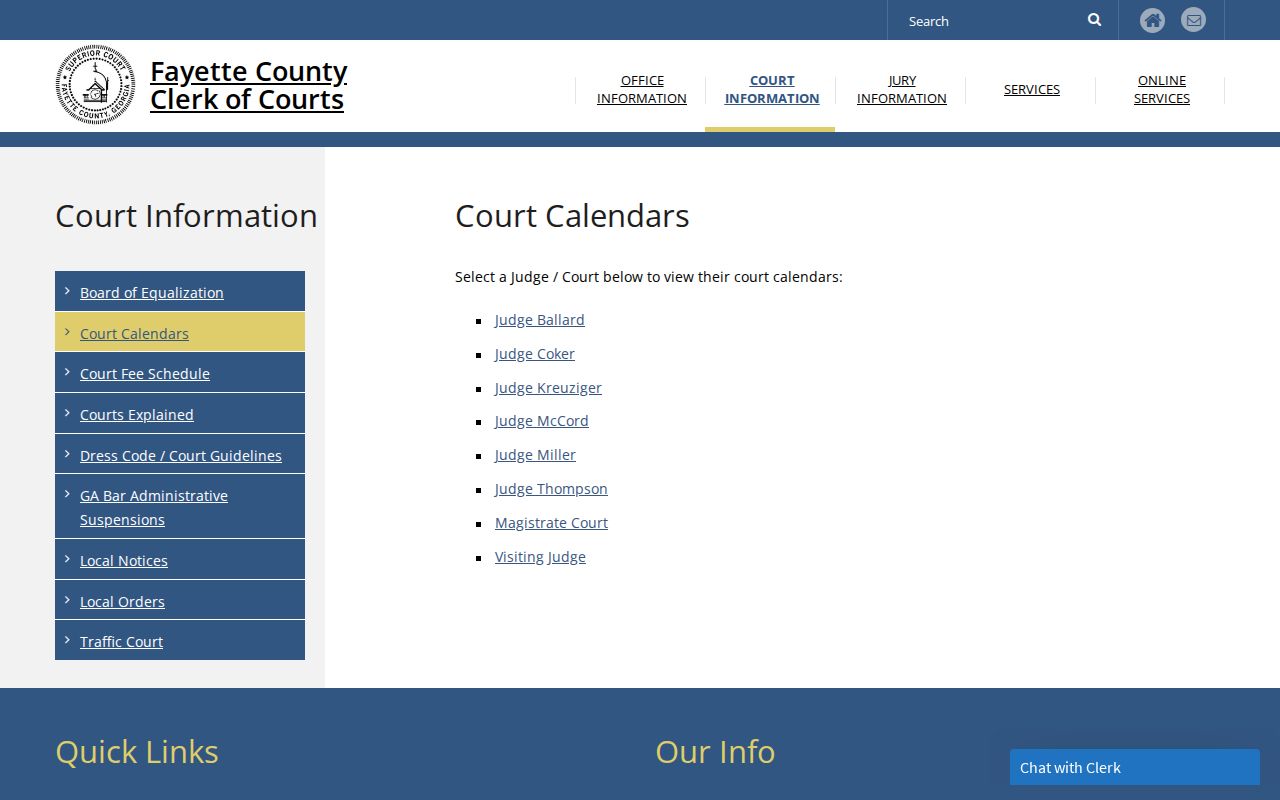
Pick the judge named on your notice first. Then open the PDF whose court, date, and setting type match your case. Remember what a PDF is: a published snapshot. It is not the final case result, and it may not reflect a later reset.
Fayette Judge Calendars Differ
Judge pages sort Fayette County court dates into different calendar families, so two judges rarely look alike. The Ballard page posts both civil and criminal settings in one place.
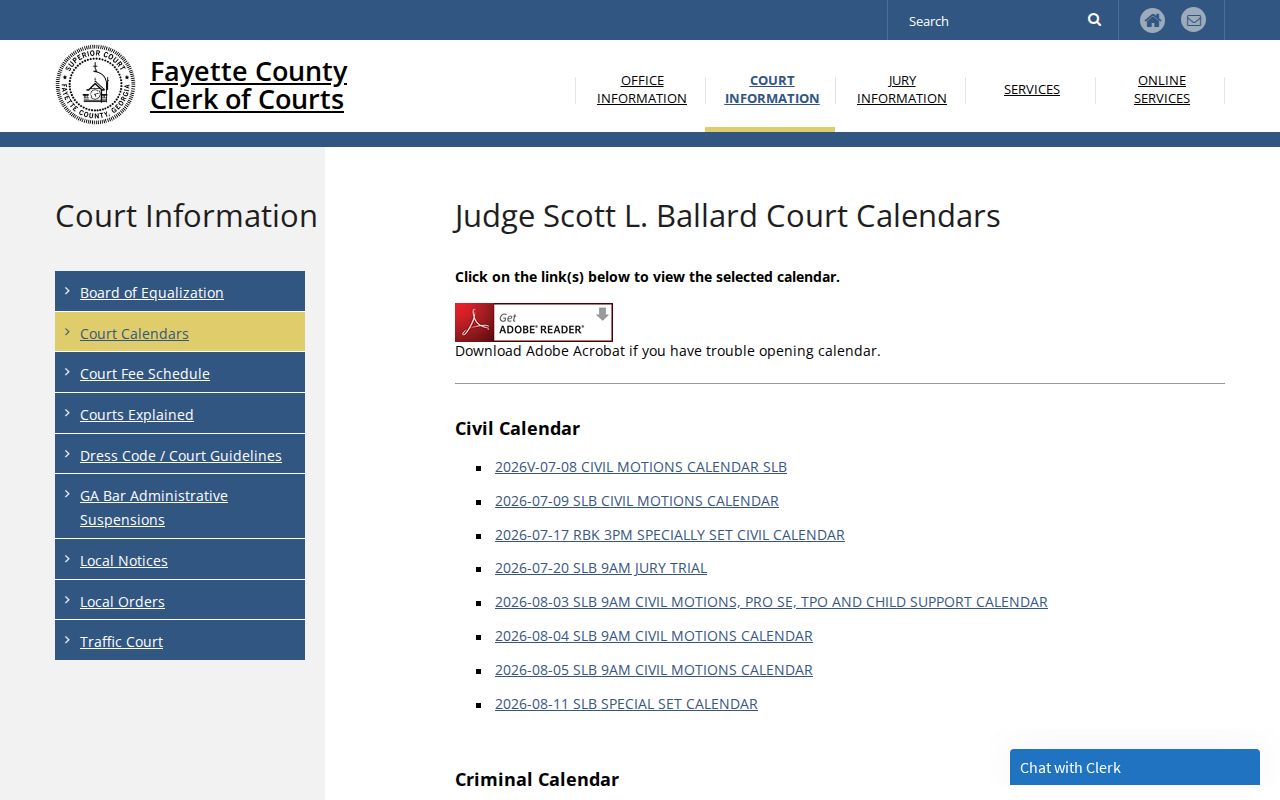
The setting type matters as much as the date itself. A civil motions calendar and a criminal calendar answer different questions. The McCord calendar page works the same way, with links built around that judge.
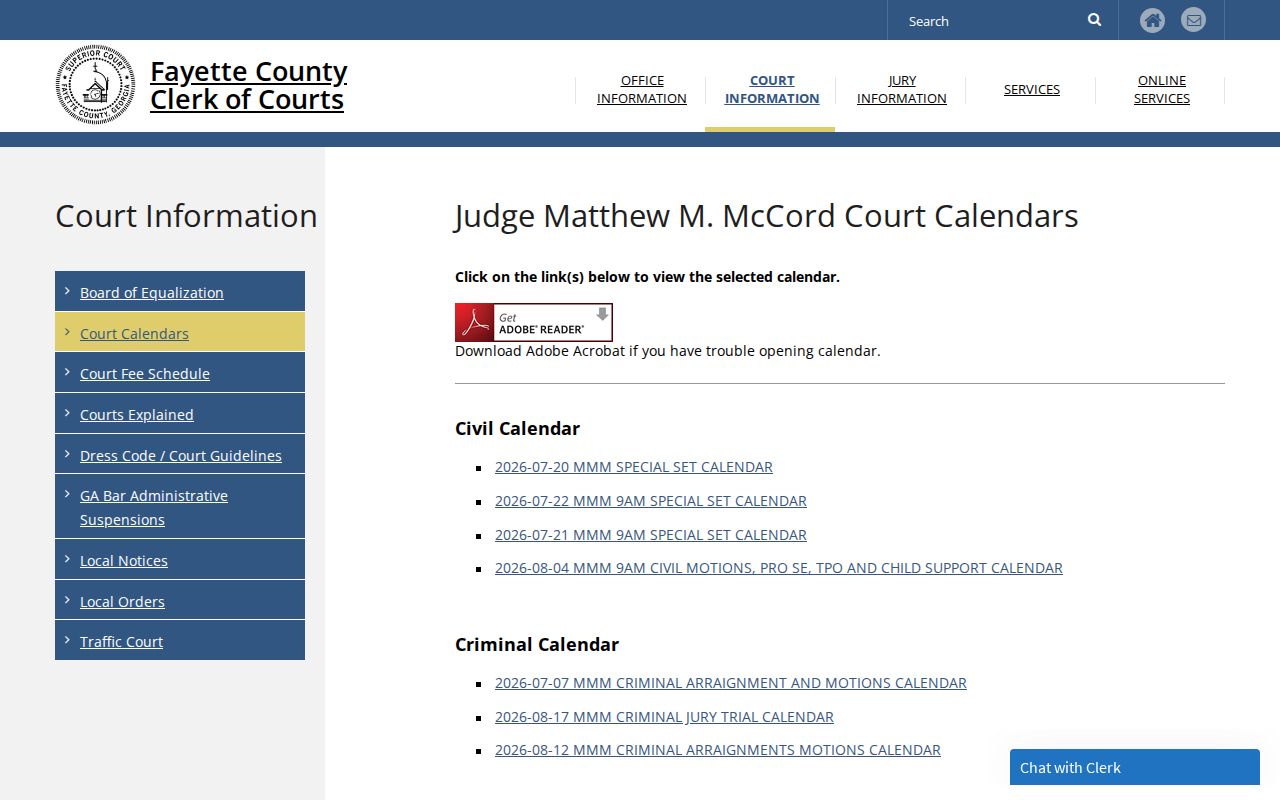
Cases sometimes move between judges. A visiting judge may be assigned too. In that situation, let the docket and your current notice point you to the right page instead of hunting through every PDF by name.
Finding Your Court Date
Use whatever channel fits. The county Court Docket link lists settings but does not always load. Calendar PDFs cover named judges and court types. For direct questions, the State Court criminal, civil, and traffic desks pick up. The Clerk routes Superior and Magistrate matters. Public terminals allow supervised record inspection at One Center Drive. Hours run from 9 a.m. to 5 p.m.
- Read the latest notice for the court, judge, case number, and event type.
- Open the Clerk calendar directory and select the assigned judge or Magistrate page.
- Choose the current PDF and match the case number, not just a name.
- Check the county docket or PeachCourt for a later reset entry.
- Call the correct clerk desk or coordinator to confirm a conflict.
State Court splits its phones by desk. Criminal staff answer at 770-716-4293, civil staff at 770-716-4294, and traffic staff at 770-716-4292. The Clerk's main line is 770-716-4290. You can also mail a copy request for the underlying notice or order, though that route is slow for an imminent hearing.
Fayette Magistrate Calendar Route
Magistrate calendar listings stand apart from the judge pages. Magistrate Court handles smaller civil claims, garnishments, dispossessory matters, abandoned vehicles, personal property foreclosures, warrant applications, and preliminary functions, so its schedule follows its own path.
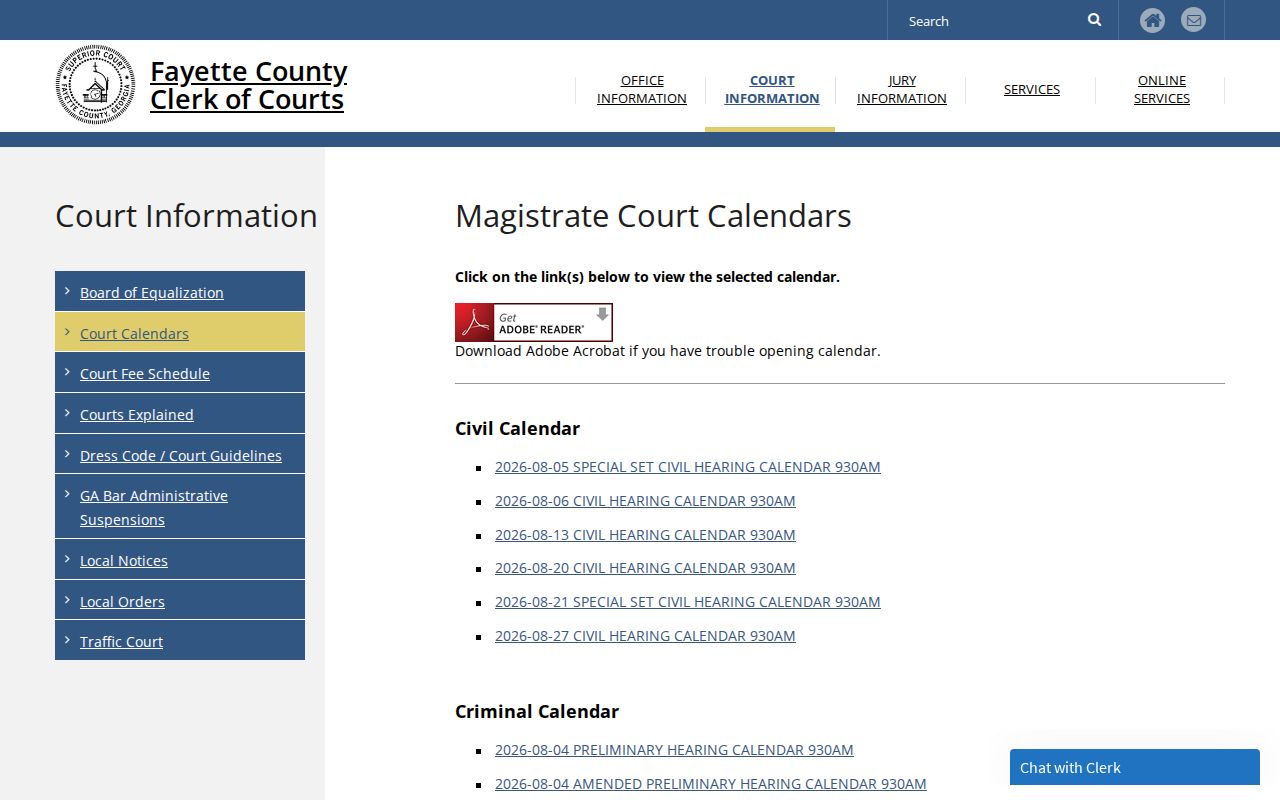
A preliminary hearing date or Magistrate civil setting belongs on this route. Do not assume it appears under a Superior judge. An appeal can later open a new State or Superior docket. It will carry a different number or setting. When a date is not visible, call the Clerk with the case number in hand. Ask whether the file is still in Magistrate Court. It may have moved on appeal, or it may be checked out for the moment.
How to Read a Court Setting
Fayette civil calendars carry more than a date. Expect the case number and style, status, type or cause, filed date, setting time, party and attorney roles, service and answer dates, a setting note, judge, court, courtroom, and the calendar generation date. Criminal calendars list the court, judge, calendar type, date and time, case number, case style, charge or status, and party or attorney roles.
| Date and time | When the event is scheduled; confirm whether the time applies to the whole calendar call. |
|---|---|
| Court and judge | The court level and assigned judicial officer. |
| Case number | The most reliable way to match the calendar row to the case. |
| Setting type | Arraignment, motion, temporary hearing, jury trial, or another event category. |
| Courtroom or note | Location or special instruction shown on the current calendar. |
A line marked hearing reports a planned event, nothing more. It does not show a ruling. Treat terms such as “OP” with care; they are not disposition codes unless the Clerk defines them.
Fayette Special-Set Hearings
One local civil PDF reads “SPECIAL SET TEMPORARY HEARING.” A special set means a specific slot reserved for the matter. Temporary describes the relief under review. Neither phrase means the case has reached final judgment.
- Setting
- A scheduled event on a court calendar.
- Special set
- A hearing placed into a specific reserved slot.
- Continuance
- A court-approved move to another date.
- Reset
- A new setting that does not dismiss the case.
- Disposition
- The final procedural or outcome entry, distinct from a hearing date.
Read three things together: the setting note, the case docket, and any signed order. When online details conflict, the written notice or direct confirmation from the court controls.
Fayette Probate Hearing Search
Probate Court runs on its own system, and the Fayette Probate Court page lays out its jurisdiction and portal routes.
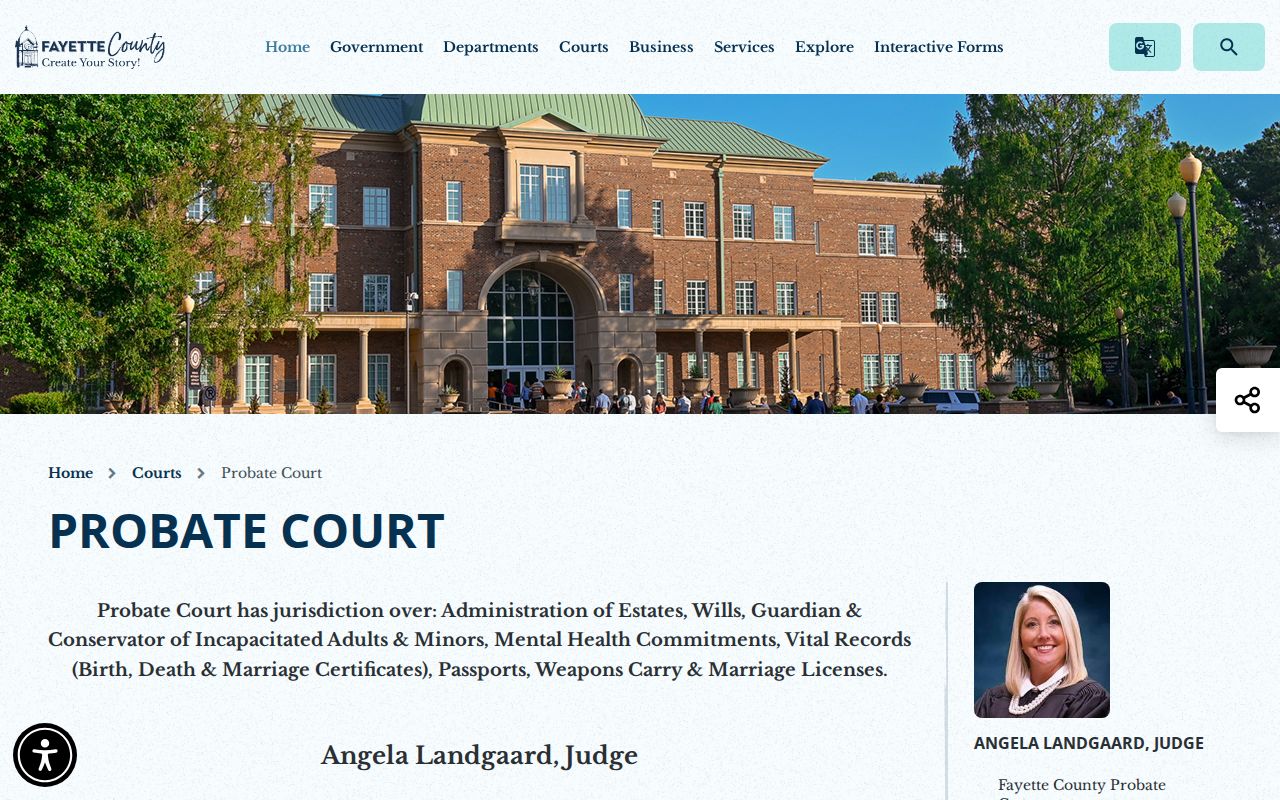
Estates, wills, guardianships, marriage matters, and other Probate work will not appear as a Superior or State setting. The Georgia Probate Records hearing search lets you search by court, name, date, and time, with hearing and traffic toggles.
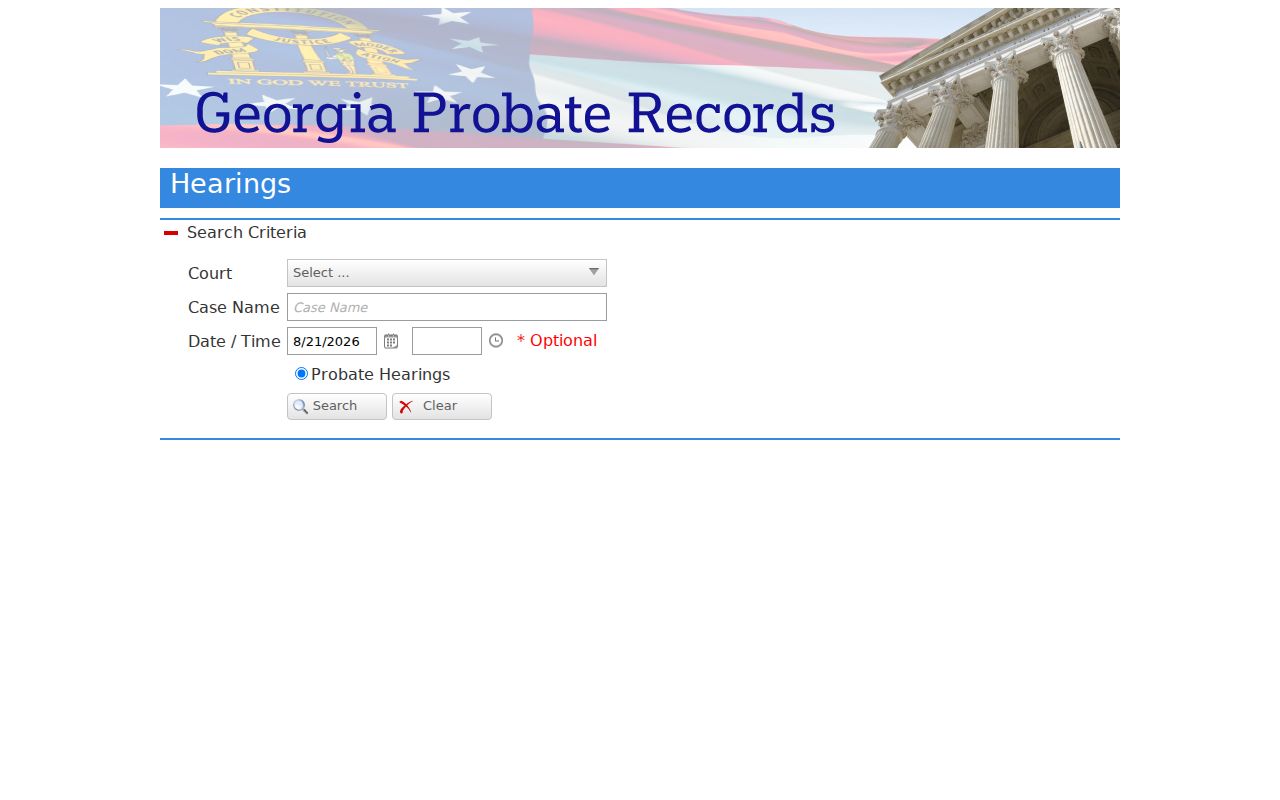
Select Fayette County and narrow the date range as tightly as you can. Then confirm the result with the Probate clerk, since this search sits apart from the county docket and the judge PDF directory.
| Channel | Best use | Limit |
|---|---|---|
| Judge PDF | Superior or State settings by judge and type | Snapshot that may later change |
| County docket | Case events and settings | Endpoint failed during research |
| Probate hearing search | Probate hearing fields and date ranges | Separate Probate coverage |
| Clerk or coordinator | Direct confirmation and routing | Needs court and case details |
Continuances, Resets, and Cancellations
A continuance is a court-approved move. A reset is simply a new date entered for the matter. Neither one ends the case. A PDF can linger online after a later docket event changes the setting. Check its generated date against your latest notice. Never assume a continuance request was granted. Only a court order or direct confirmation establishes the change. City municipal courts publish their own rules. A city citation must follow the city court named on the ticket.
Note: Printed notices and court orders control. They win when they conflict with an older online calendar snapshot.
If You Miss a Court Setting
Call the court named on your notice right away. The clerk can pull the file once you give the case or citation number. Add the date you missed and the kind of setting it was. Ask if the judge entered a new date or issued an order. A failure-to-appear consequence may also have been added. Whatever the answer, act on it rather than waiting for the PDF to update.
Act promptly: A missed Fayette County court date can trigger case-specific consequences. Only the court or clerk can state what was entered and what action is now required.
State Court and Superior Court matters may also show a later entry on the county docket page for your assigned judge. Magistrate and Probate run their own calendars, so use each court's separate route there. Keep any new written notice with your case papers.
Fayette Calendar Conflicts
Two dates can clash on a Fayette County court calendar. The mismatch usually traces back to records produced at different times. Check the PDF generation date. Check the most recent docket event, and the date printed on your written notice. A fresh order or new notice beats an older calendar every time. And if a PDF vanishes, that does not mean the case was dismissed.
Call the desk that owns the setting. Fayette County splits criminal, civil, and traffic into separate offices. Superior, Magistrate, and Probate each run their own channels too. Have the case number, the judge, the old date, the new date, and the type of hearing ready when you call.
Conflict check: The newest court order, notice, and direct clerk confirmation determine the operative setting.